Sports Research sells a tart cherry gummy built for exactly one job. The product page says it supports “athletic recovery,” it delivers 600 mg of NordicCherry tart cherry per two gummies, and it sits in a catalog of 224 product URLs from a brand AI models already like for MCT oil and collagen.
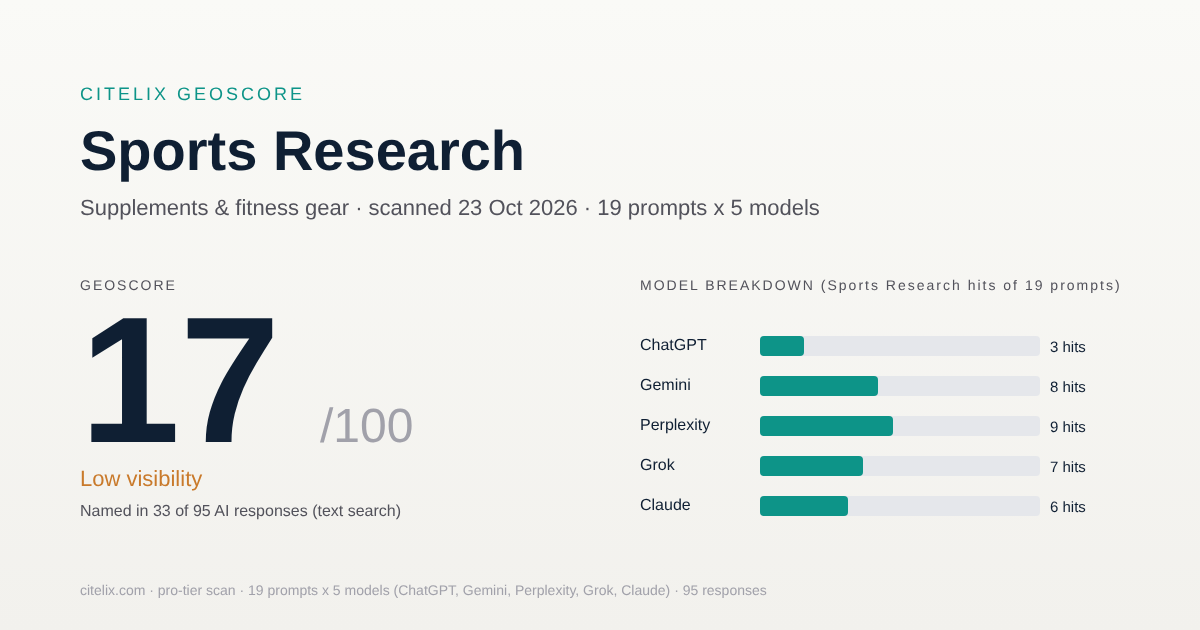
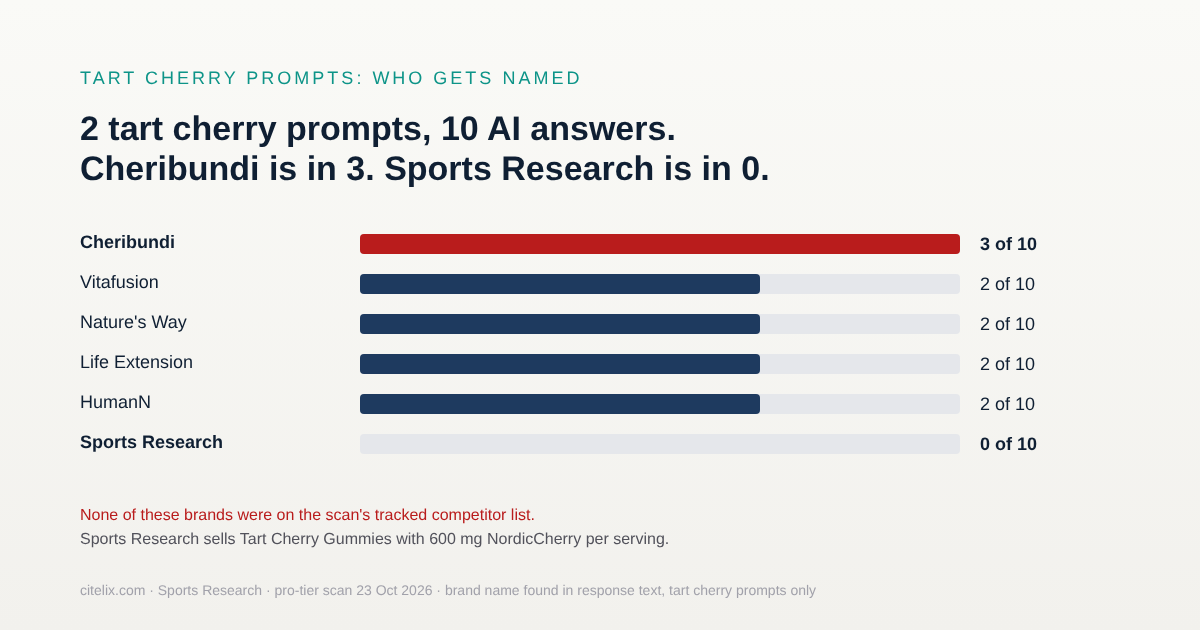
So I expected Sports Research to show up when I asked the models whether tart cherry gummies help with sore muscles. I scanned the brand across ChatGPT, Gemini, Perplexity, Grok, and Claude this week. It came back with a Citelix GeoScore of 17 out of 100. Searching the response text, Sports Research was named in 33 of 95 answers. On the two tart cherry prompts, it was named in 0 of 10. Cheribundi, a tart cherry specialist that was not on the scan’s competitor list, was named in 3.
The prompt I tested
The scan ran 19 prompts across supplements and fitness gear. The anchor for this teardown:
“is tart cherry gummy good for muscle soreness after workouts”
Why this prompt: Tart Cherry Gummies are one of the ten products the scan flagged as Sports Research’s top sellers, and the product page leads with workout recovery. This buyer has already picked the format (gummy) and the job (soreness). They just need a brand.
What Gemini said
Gemini gave the most shoppable answer of the five. It explained the antioxidant and anti-inflammatory case, then listed specific products under a “Specific Brands and Products” heading: OrganoLeaf Muscle & Exercise Recovery Tart Cherry Gummies, Cheribundi Tart Cherry Gummies, Life Extension Tart Cherry with CherryPURE, Charlotte’s Web Muscle Recovery Gummies, and HumanN Tart Cherry Chewables. No Sports Research.
The other models:
- ChatGPT recommended Vitafusion Tart Cherry Gummies, Nature’s Way Tart Cherry, and Garden of Life Organic Tart Cherry Gummies.
- Grok listed HumanN, Trace Minerals, Cherrish, and BulkSupplements capsules under “Brands & products that deliver research-level doses.”
- Perplexity stayed cautious and named one product, For Wellness Recovery Gummies, citing forwellness.com, mindbodygreen.com, and nsca.com.
- Claude cited a 2021 meta-analysis and gave dosing advice without naming a brand. Its two sources were thewelltheory.com and charlottesweb.com, both brand sites.
The second tart cherry prompt in the scan (“are tart cherry gummies effective for sleep and inflammation”) went the same way. Cheribundi was named by Gemini and Perplexity, and Perplexity cited cheribundi.com directly. Sports Research was named in neither answer set.
The discovery gap
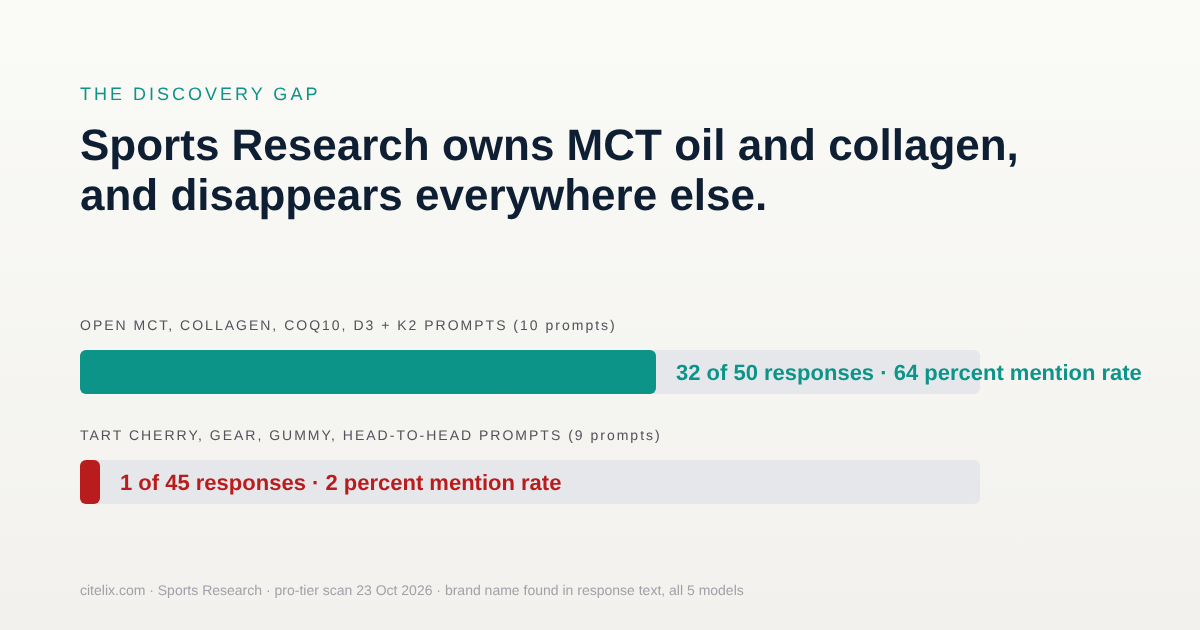
No prompt in this scan named Sports Research, so every answer was a discovery answer. The gap shows up by product line instead.
- Where Sports Research wins: MCT oil, collagen, and vitamin D3 + K2 gummies. It was named in 5 of 5 answers to “which is a better starter collagen peptide brand for athletes,” 5 of 5 to “compare MCT oil brands for keto and energy support,” and 4 of 5 to “best vegan vitamin D3 + K2 gummies for joint health and immune support.”
- Where it is absent: tart cherry (0 of 10), the fitness accessory prompts about trimmers and gym gear (0 of 10), and the three prompts that named two other brands head to head (1 of 15).
Across the 10 open prompts about MCT, collagen, CoQ10, and D3 + K2, Sports Research was named in 32 of 50 answers. Across the other 9 prompts, 1 of 45.
Why Cheribundi won the tart cherry prompts
I read all ten tart cherry answers, the sources they cited, and both brands’ sites. Four things stand out.
1. Cheribundi is a tart cherry company; Sports Research is a catalog
Cheribundi’s store lists 14 products, and every one is tart cherry: juice, concentrate, and two gummies (Sleep and Pure). When a model looks for “tart cherry brand,” the whole domain answers the question. Sports Research has tart cherry gummies and a tart cherry concentrate, but they sit among 224 product URLs that run from fish oil to waist trimmers. Nothing on sportsresearch.com tells a model that tart cherry is something the brand stands behind.
2. The Sports Research gummy page has no Product schema
I loaded the Tart Cherry Gummies page and read its structured data. It carries WebSite and BreadcrumbList markup and nothing else: no Product, no Offer, no AggregateRating. The Omega-3 Fish Oil page is the same, so this looks like a site-wide template gap on the headless storefront. Cheribundi’s Sleep Gummies page carries Product, Brand, AggregateRating, and Review markup.
3. The page never says “soreness,” and the gummy is out of stock
The buyer asked about muscle soreness. The Sports Research page talks about “athletic recovery” and “antioxidant activity,” but the word soreness does not appear anywhere on it. There is no dose guidance tied to training, no summary of the research the models kept quoting, and no FAQ. On the day I checked, the 600 mg size also showed “Not available, notify me when back in stock,” with 7 reviews behind its 4.9 rating.
4. The one tart cherry article in the sitemap is a dead link
Sports Research’s sitemap lists 226 article URLs across four blogs. One of them is a gummies guide that covers tart cherry, D3 + K2, ACV, and vitamin C. That URL returns a 404. The /faq page has real Question and Answer markup, but none of its answers mention tart cherry. So the content a model could quote to connect “Sports Research” with “tart cherry for soreness” either does not exist or does not load.
What Sports Research is missing
I checked sportsresearch.com by hand. For this prompt:
- No Product schema on product pages. The tart cherry and fish oil pages expose only WebSite and BreadcrumbList. Shopping agents that read structured data get no price, rating, or brand.
- No soreness answer. The gummy page avoids the buyer’s word and the research the models cite.
- A broken tart cherry article. The only sitemap URL that covers the gummy returns a 404.
- A thin review base. 7 reviews on the gummy, against a brand whose MCT and collagen products the models already trust.
Credit where due: the scan’s strongest pattern is a good one. On MCT oil and collagen, Sports Research is the default answer in most of the five models. The brand has authority. It just has not extended it to tart cherry.
3 fixes Sports Research could ship this week
None of these need a new product.
Fix 1: Add Product schema to the product template
Why this matters: right now a model or shopping agent reading the tart cherry page learns the site’s URL and its breadcrumb, nothing about the product. Cheribundi’s gummy page hands over brand, price, and rating in markup.
How to do it: In the headless product template, output Product JSON-LD with name, brand (“Sports Research”), Offer (price, availability), and AggregateRating from the review app. Validate the Tart Cherry Gummies and Omega-3 Fish Oil pages in Google’s Rich Results Test.
Estimated time: half a day for a developer.
Fix 2: Answer the soreness question on the gummy page
Why this matters: every model that answered this prompt quoted the same research (meta-analyses on tart cherry and post-exercise soreness) and gave dose and timing advice. The Sports Research page offers neither, so there is nothing for a model to connect to the product.
How to do it: Add a short “Tart cherry and muscle soreness” section to /products/tart-cherry-gummies: what the research found, how 600 mg of NordicCherry per serving compares to the doses the studies used, and when to take it around training. Add three or four FAQs with FAQPage markup, and fix or redirect the 404 gummies guide so it points at this page.
Estimated time: half a day.
Fix 3: Get the gummy into the recovery roundups
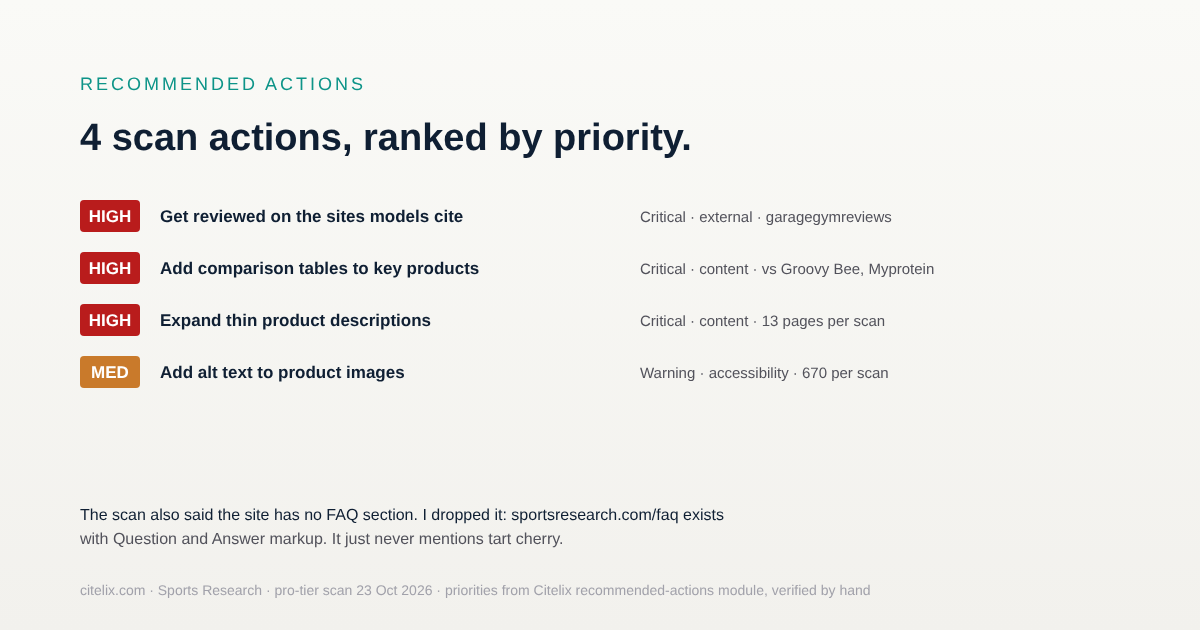
Why this matters: the scan’s top cited domain was garagegymreviews.com (8 citations), and the scan’s review-site action was rated high. Tart cherry answers were built from roundups and brand sites, and Sports Research is in neither.
How to do it: Restock the 600 mg size first. Then pitch the gummy to the recovery and tart cherry roundups on garagegymreviews.com, barbend.com, and verywellhealth.com, leading with the NordicCherry dose and third-party testing. Ask recent buyers for reviews to grow past 7.
Estimated time: 1 hour to send, weeks to land.
The 30-second version
If you only do one thing: put Product schema on your product pages. Sports Research is already the AI default for MCT oil and collagen, but on tart cherry it was named in 0 of 10 answers while Cheribundi, a single-ingredient brand, was named in 3. The gummy page has no structured data, never says “soreness,” was out of stock, and its only supporting article is a 404.
Methodology
I ran this scan through Citelix on 2026-10-23 (pro-tier, 19 prompts across ChatGPT, Gemini, Perplexity, Grok, and Claude, 95 responses in total, Claude collected via batch and complete). The GeoScore of 17 is the scan’s final score. The scan auto-detected the brand name as “The Home of Sweet Sweat & Quality Supplements” (the site’s page title), so its own mention flags were unreliable in both directions. Every mention count in this teardown comes from searching the full response text for “Sports Research.” Cheribundi, Vitafusion, Nature’s Way, Life Extension, and HumanN were not among the 10 competitors the scan tracked. Site details come from sportsresearch.com’s live product pages, sitemap, and FAQ, and from cheribundi.com’s product feed and product page, on the same day.
One data note: the scan recommended “implement an FAQ section,” saying the site has none. sportsresearch.com/faq exists with Question and Answer markup, so I left that action out. This teardown is independent and not sponsored by either brand.
Want this teardown for your store? Install Citelix on Shopify. We scan your store across ChatGPT, Gemini, Perplexity, Claude, and Grok every day and tell you exactly which prompts your competitors win and what to change.