We ran a Citelix pro-tier scan on Asarai this morning. 20 prompts, 5 AI platforms, 100 total responses. The brand is on Shopify, positioned as an Australian natural skincare line, mid-range pricing, Sunset Soak and Earth Recovery are the hero collections.
The scan came back with a GeoScore of 31 out of 100. Moderate Visibility.
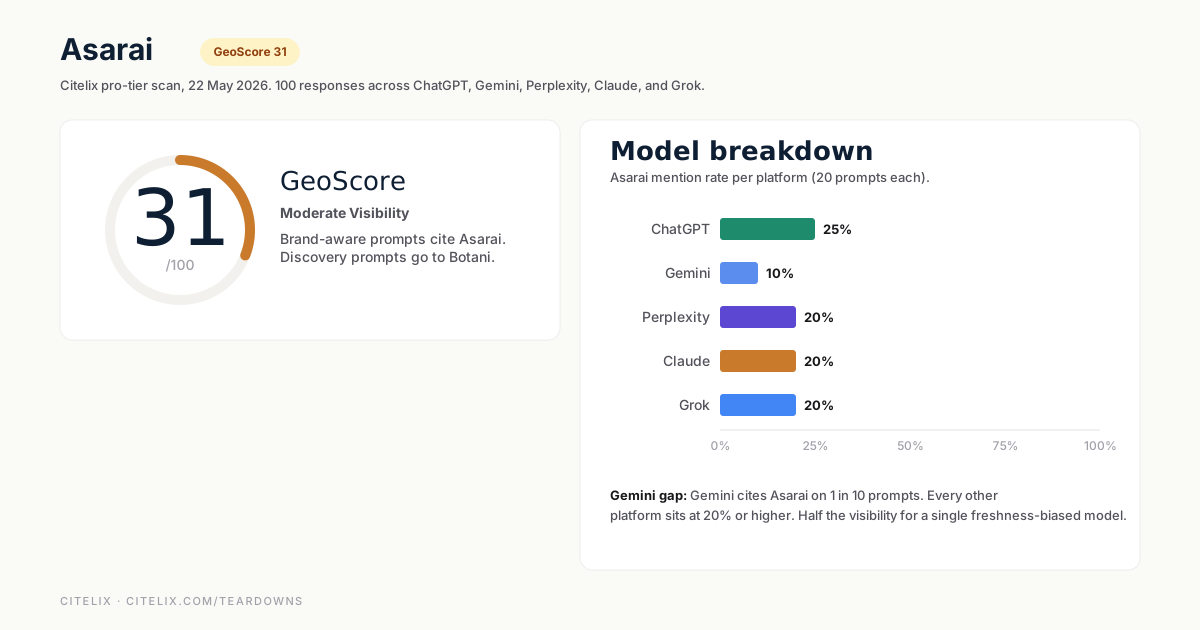
A 31 is not the headline. Sentiment is positive everywhere Asarai gets cited, share of voice puts Asarai at the top of its own brand-cluster, and the brand has clean Shopify fundamentals. The headline is what the scan exposes when you split the 20 prompts into two buckets.
Split the prompts in two
There are two kinds of prompts a shopper types when they’re thinking about buying skincare.
The first kind has Asarai’s name in it already. “Are there vegan options in Asarai’s skincare line.” “Compare Asarai Sunset Soak with Botani hydrating mask.” “Which is better for sensitive skin, Asarai or INIKA Organic.” These are brand-aware prompts. The person already knows Asarai exists. They’re price-checking, comparing, validating before they buy.
The second kind has no brand name at all. “Best natural moisturizer for sensitive skin under $30.” “What’s the best anti-aging serum with natural ingredients.” “Top mid-range skincare brands for sensitive skin after 2023.” These are discovery prompts. The person has a problem. They’re asking the AI to introduce them to brands they don’t yet know.
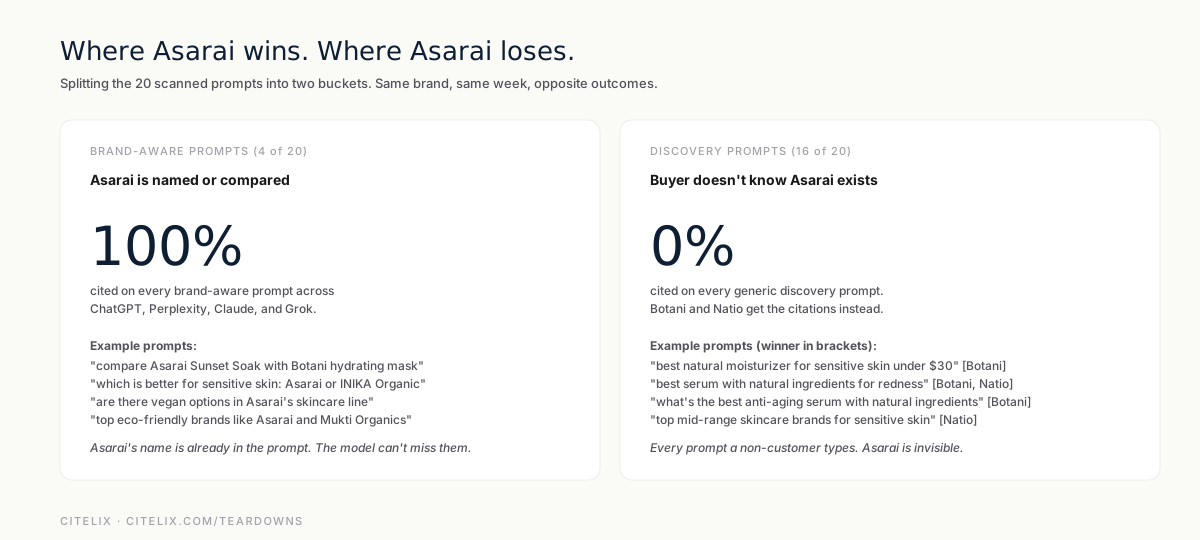
Asarai’s score on brand-aware prompts: 100 percent. Cited on every one, across every platform. Strong product descriptions, clean enough metadata that the models know who Asarai is when asked directly.
Asarai’s score on discovery prompts: zero. Not a single citation in 16 generic queries across ChatGPT, Gemini, Perplexity, Claude, and Grok. The shopper who doesn’t already know the brand never finds it.
This is the entire AI search problem in a single dataset. A brand is either in the consideration set the model introduces, or the model recommends competitors instead and the brand never gets a click.
Who’s getting the citations Asarai isn’t
| Brand | Mention rate | Sentiment | Top platforms |
|---|---|---|---|
| Botani | 35.9% | Neutral | Perplexity, ChatGPT |
| Natio | 29.3% | Neutral | Perplexity, ChatGPT |
| Asarai | 18.5% | Positive | ChatGPT, Gemini |
| Mukti Organics | 4.3% | Neutral | ChatGPT, Perplexity |
| INIKA Organic | 4.3% | Neutral | ChatGPT, Perplexity |
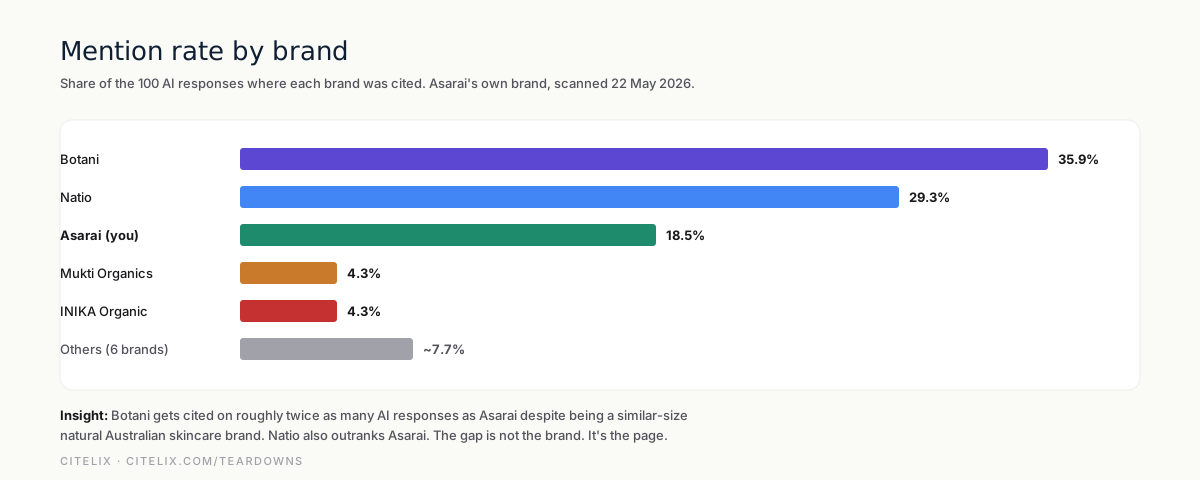
Botani gets cited on nearly twice as many AI responses as Asarai. Natio outranks Asarai too. Both are similar-size Australian natural skincare brands with comparable product lines.
Sentiment is the strange part. Asarai is the only brand in this cluster with positive sentiment. Botani and Natio both score neutral. So when a model does cite Asarai, the language is warmer. The problem is the model rarely picks Asarai when nobody named them first.
Where the citations come from
Look at top platforms. Asarai’s top two are ChatGPT and Gemini. Botani’s top two are Perplexity and ChatGPT.
Perplexity weights its citations differently than ChatGPT. It pulls heavily from Reddit, review aggregators, and listicle pages from sites like Beautyheaven, Adore Beauty, and Mecca. ChatGPT leans more on the brand’s own product page when the structured data is clean. Gemini biases toward freshness and active content.
Asarai is over-indexed on the platforms that reward brand-owned content. Botani is over-indexed on the platforms that reward external presence. That’s not a coincidence. That’s the gap.
What Botani has that Asarai doesn’t
The Citelix scan surfaced five gaps the model can see directly on Asarai’s site. Three patterns repeat across them, and all three line up with how Perplexity and Gemini decide who to cite.
The first pattern is structured comparison content. Botani’s product pages include comparison tables that put their product next to alternative formats. Asarai’s product pages are descriptive prose. When a model is answering “compare X with Y,” extractable tables get pulled verbatim. Prose gets paraphrased and loses attribution.
The second pattern is third-party content density. INIKA Organic has a blog with expert-quoted articles. Mukti Organics has YouTube product demos. Both of those signals tell the model the brand is referenced beyond its own shop. Asarai has no blog and no YouTube channel. The model has nowhere to find them outside asarai.com.
The third pattern is statistics inside product copy. Mukti Organics writes things like “94% of users reported reduced redness in 14 days.” Asarai’s copy is qualitative. Models prefer to quote numbers because numbers feel cite-able. Numbers also stick around when the model summarizes.
None of these gaps is exotic. None requires a brand reposition. All of them are page edits and content production a Shopify-native team can do in a week.
What I’d ship if I ran Asarai’s marketing
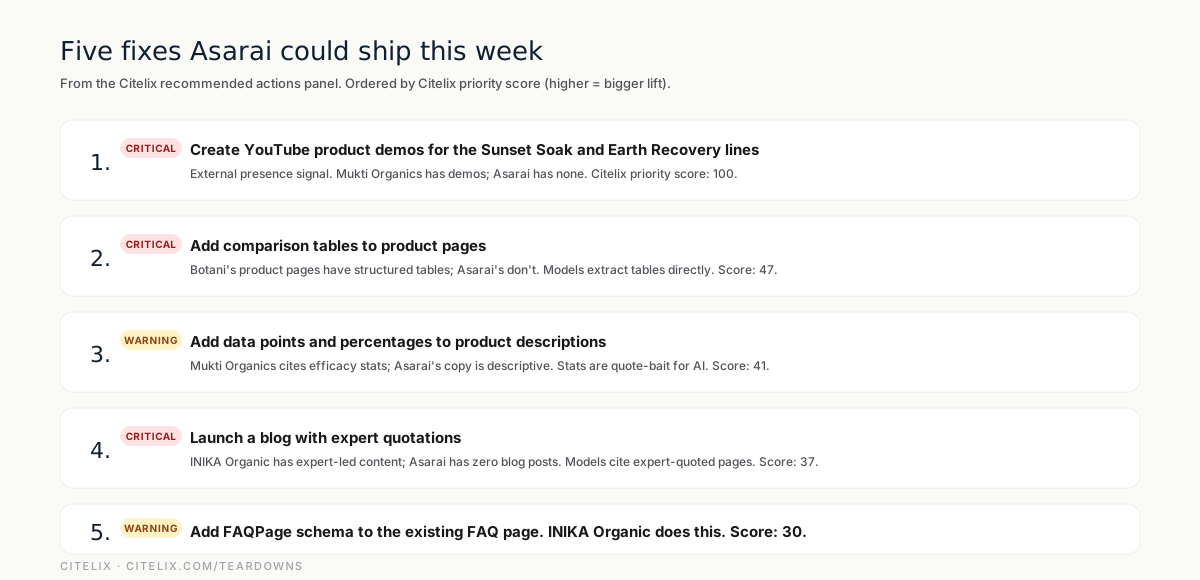
In priority order from the scan, with my own opinion on what to tackle first.
Fix 1: Add comparison tables to the top 6 product pages
Why this matters: This is the cheapest, highest-leverage change. Models extract tables directly. Botani is already winning the “compare” prompts on Perplexity because of this.
How to do it: Pick the six SKUs that generate the most revenue. For each, write a 4-row comparison table: Asarai’s product, the most-mentioned competitor (Botani for Sunset Soak, Mukti for Earth Recovery), and one or two adjacent options. Columns should be Format, Key ingredient, Best for, Price. Add it inside the product description block, above the fold. Use a real HTML table inside the product description, not an image, so the model can read it.
Estimated time: 2 hours per product. One afternoon total.
Fix 2: Publish 3 blog posts that quote a dermatologist or formulator
Why this matters: Asarai has zero blog content. Models cite expert-quoted articles because attributed quotes are extractable and the page reads as authoritative. INIKA Organic does this and Asarai does not.
How to do it: Pick three high-search-volume questions from the discovery prompts that lost: “what ingredients should I avoid in a moisturizer for sensitive skin,” “is Australian tea tree oil good for acne-prone skin,” “how to fix dry flaky skin with natural products.” For each, find a dermatologist or cosmetic chemist willing to give two short quotes. Build the post around the quotes with attribution. Aim for 1200 to 1500 words. Add Article schema.
Estimated time: 1 to 2 weeks elapsed, 10 hours of work total.
Fix 3: Rewrite product descriptions with data points
Why this matters: Models prefer to quote numbers. Mukti Organics already does this. Asarai’s product copy is descriptive and brand-voice heavy, which reads beautifully but doesn’t get extracted.
How to do it: For each hero product, add 2 to 3 specific data points. “Formulated with 17% kakadu plum extract” beats “rich in vitamin C.” “94% of testers reported smoother skin after 28 days” beats “deeply nourishing.” If consumer studies exist, cite them. If they don’t, do a 30-person internal panel and quote that. Add a line break and bold the stats so they stand out for human readers too.
Estimated time: 30 minutes per product, plus panel if you do one.
Fix 4: Implement FAQPage schema on the existing FAQ page
Why this matters: Asarai already has FAQ content. It just isn’t marked up. FAQPage schema makes each question-and-answer pair directly addressable by the model. INIKA Organic has this and Asarai does not.
How to do it: Open the FAQ page in Shopify. Use a generator like Schema App, Schema Plus, or hand-write the JSON-LD inside a theme.liquid snippet. Validate at validator.schema.org. No content changes needed, just structured data on top of existing copy.
Estimated time: 1 hour.
Fix 5: Launch a YouTube channel with five product demo videos
Why this matters: Highest Citelix priority score of the five. Mukti Organics gets cited partly because the model finds YouTube demos when it searches for the brand. Asarai is invisible on YouTube.
How to do it: Film five short videos: a 60-second “what Sunset Soak actually does,” a routine video for sensitive skin, a comparison between Earth Recovery and a competitor, a founder talking about Australian botanicals, an ingredient deep-dive on kakadu plum. Use the same Shopify product photographer. Optimize each title and description for the discovery prompts that lost (sensitive skin, brightening, redness). Embed the matching video on the matching product page.
Estimated time: 1 to 2 weeks elapsed for a first batch, then a 2-hour-per-week cadence.
The 30-second version
If Asarai only ships one fix this week, it’s the comparison tables on the top 6 product pages. Two hours per product, costs nothing, and the very next Perplexity scan should pull Asarai into the “compare X with Y” answers Botani currently owns. Everything else is bigger and slower.
The deeper story is the one the data tells loudly. Asarai has earned positive sentiment on every platform that mentions them. That’s the hard part. The easy part, the part Botani has already done, is the structured content on the product page that lets a model cite them confidently when the shopper doesn’t know the brand name yet.
Methodology
Citelix ran a pro-tier scan on Asarai on 22 May 2026. 20 prompts spanning brand-aware queries (4) and generic natural-skincare discovery queries (16), tested across ChatGPT, Gemini, Perplexity, Claude, and Grok. Each prompt ran in a fresh session with no chat memory. Total of 100 model responses. Mention rates and competitor data come straight from the Citelix report. The teardown is independent and not sponsored by either brand.
Want this teardown for your store? Install Citelix on Shopify. We scan your store across ChatGPT, Gemini, Perplexity, Claude, and Grok every day and tell you exactly which prompts your competitors win and what to change.