We ran a Citelix pro-tier scan on Beardbrand this evening. 13 prompts, 5 AI platforms, 65 total responses. The brand is on Shopify, registered to Eric Bandholz, mid-range positioning, beard oil and beard balm are the core SKUs. Eric also runs one of the largest men’s grooming channels on YouTube.
The scan came back with a GeoScore of 30 out of 100. Moderate Visibility.
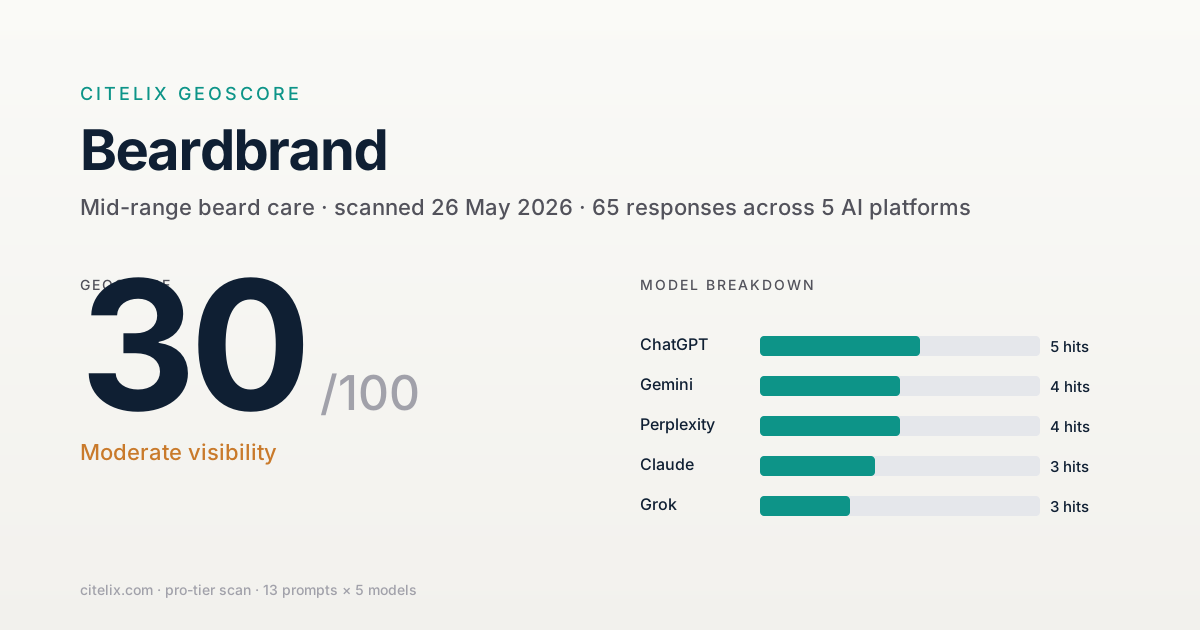
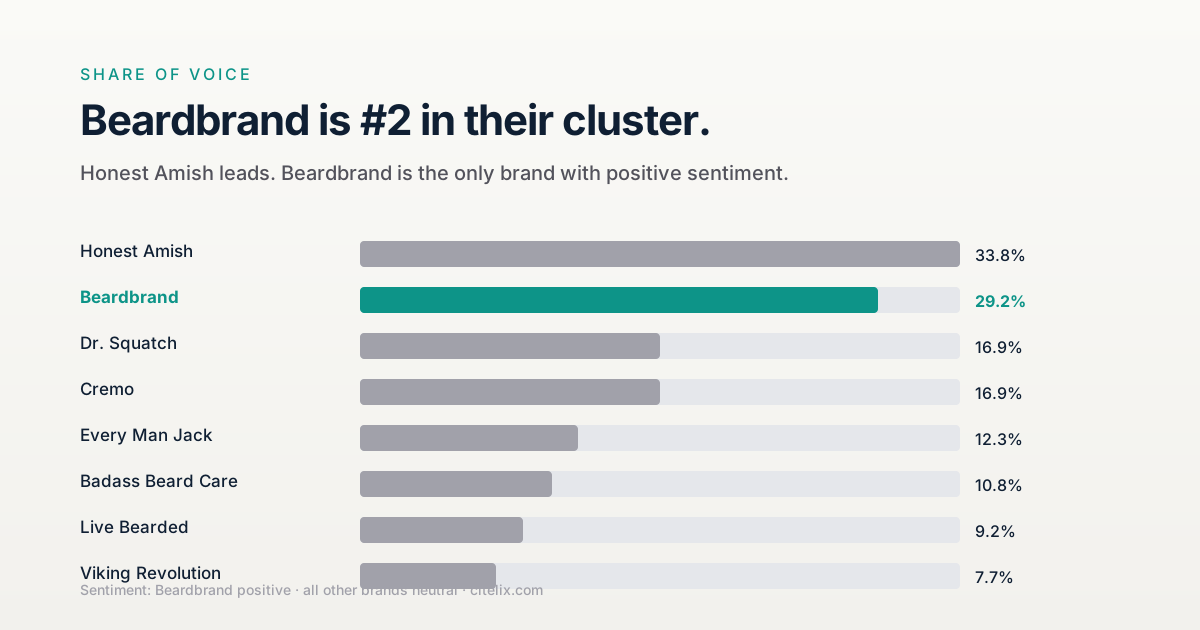
A 30 is not the headline. Sentiment is positive everywhere Beardbrand gets cited (the only positive-sentiment brand in the cluster). Share of voice puts Beardbrand at #2 behind Honest Amish, ahead of Dr. Squatch. The headline is what the scan exposes when you put two near-identical prompts side by side.
Two prompts, one product, opposite outcomes
The scan included these two prompts:
- “what’s the best beard oil for sensitive skin”
- “solutions for dry and flaky beard skin”
Same target customer. Same underlying problem (reactive skin, dryness). Same product set in Beardbrand’s catalog. Beard oil with light moisturizing oils, no harsh fragrance, gentle ingredients.
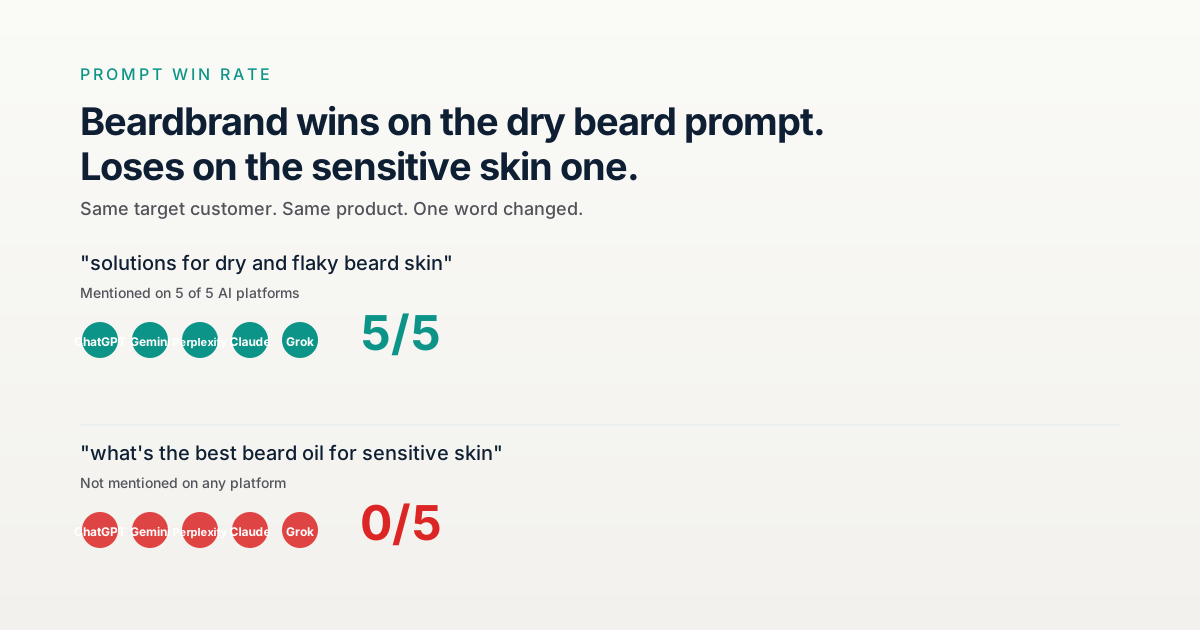
On “solutions for dry and flaky beard skin,” Beardbrand was cited by all 5 platforms. ChatGPT and Gemini at position 1. Perplexity, Claude, Grok at position 2. The model recommended a Beardbrand product by name on every single response.
On “what’s the best beard oil for sensitive skin,” Beardbrand was cited by zero platforms. Not mentioned by ChatGPT. Not by Gemini. Not by Perplexity. Not by Claude. Not by Grok. The five competitors that took those citations: Honest Amish, Cremo, Live Bearded, Badass Beard Care, Dr. Squatch.
This is not a small gap. This is the same shopper, the same problem, the same product, and the model treating Beardbrand as the obvious answer in one prompt and a non-entity in the other. The whole AI search game is what wording wins the model over and what wording loses it.
Why one prompt wins and the other loses
Read the responses side by side and the difference is clear. The “dry and flaky beard skin” prompt is a symptom prompt. The model reasons through the problem first (cleanse, moisturize, gentle exfoliation) and then names brands that match the solution. Beardbrand’s product pages talk in those terms. Utility Bar for cleansing, Utility Softener for moisture, beard oil sealed in last. The model can stitch a routine together and Beardbrand SKUs slot in cleanly.
The “best beard oil for sensitive skin” prompt is a category prompt. It asks the model for an opinion on a product category, filtered by a skin attribute. The model goes hunting for brands that explicitly position themselves for sensitive skin. Honest Amish, Cremo, and Badass Beard Care all have product copy that contains the phrase “sensitive skin” or “for sensitive skin types.” Beardbrand has skin-aware product copy but does not use the trigger phrase. The model can’t make the match.
The fix is a single page. We’ll get to that.
Where Beardbrand sits in the competitive set
| Brand | Mention rate | Sentiment | Top platforms |
|---|---|---|---|
| Honest Amish | 33.8% | Neutral | ChatGPT, Gemini |
| Beardbrand | 29.2% | Positive | ChatGPT, Gemini |
| Dr. Squatch | 16.9% | Neutral | Grok, Perplexity |
| Cremo | 16.9% | Neutral | ChatGPT, Gemini |
| Every Man Jack | 12.3% | Neutral | Grok, Gemini |
| Badass Beard Care | 10.8% | Neutral | Claude, ChatGPT |
| Live Bearded | 9.2% | Neutral | Perplexity, Claude |
| Baxter of California | 9.2% | Neutral | ChatGPT, Grok |
| Viking Revolution | 7.7% | Neutral | Grok, Gemini |
Two things stand out. First, Beardbrand is the only brand in the cluster with positive sentiment. When the model picks Beardbrand it picks confidently and the language reads warmer than the language used for Honest Amish. Second, Beardbrand’s top platforms are ChatGPT and Gemini, both of which lean on the brand’s own product pages and structured data. That is the opposite of Dr. Squatch, whose top platforms are Grok and Perplexity, both of which pull harder from third-party content. Beardbrand owns the on-site signal. Beardbrand is weaker on the off-site signal.
Three flags worth surfacing
Before the fixes, three contradictions in the scan that are worth naming so nobody pretends the data is cleaner than it is.
First, the brand is registered to Citelix as “Beard Products” but the actual brand is Beardbrand and the URL is beardbrand.com. That is a naming bug on the input side that we’ll fix in the brand record. It does not change the analysis. The model is still seeing “Beardbrand” in its responses.
Second, the scan banner reports “Beard Products was mentioned in 8 AI responses.” The competitor comparison table reports 29.2% mention rate. 29.2 percent of 65 responses is roughly 19 mentions, not 8. The accurate count from a prompt-by-prompt sweep is 19 mentions, so the 29.2 figure is the right one. The “8” in the banner reflects the recent-mentions preview, not the total.
Third, Citelix’s scan recommends “Create YouTube Product Demos” as one of the priority fixes. Beardbrand was started as a YouTube channel. Eric Bandholz’s channel has been running since 2012 and is the largest men’s grooming channel in the category. The scan is not seeing the channel as a signal. That is a scan gap, not an action item, and we are dropping that recommendation from the fix list below.
The five things Beardbrand could ship this week
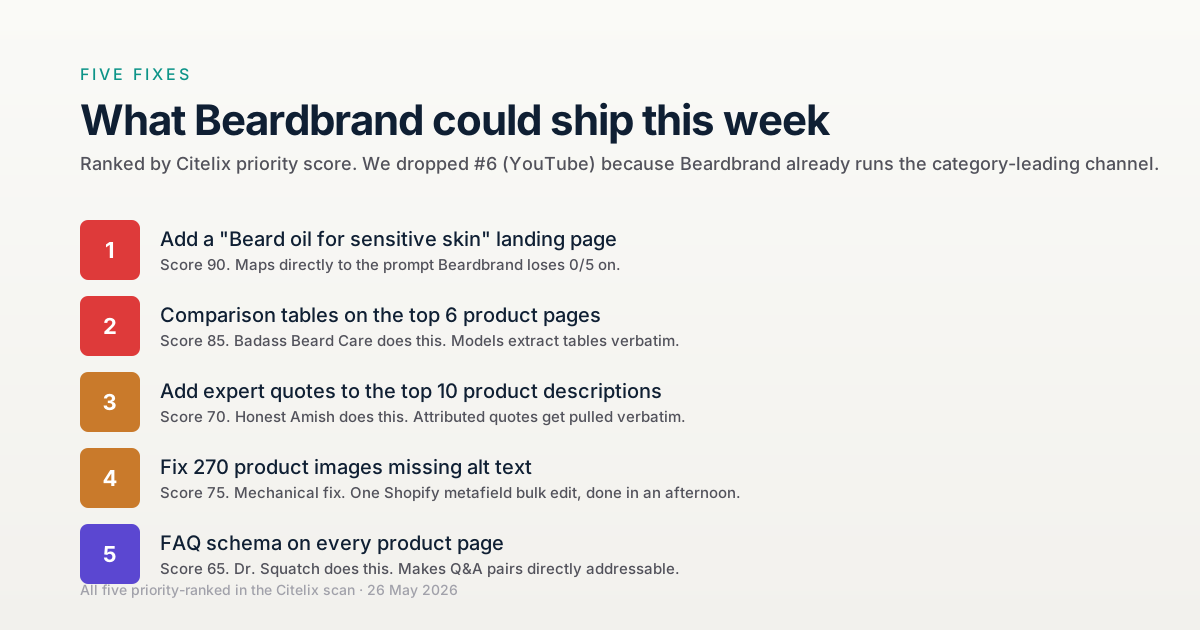
In priority order from the scan, with the YouTube recommendation removed and the missing “sensitive skin” landing page added at the top because that is the one prompt the scan most clearly shows Beardbrand losing.
Fix 1: Build a “Beard oil for sensitive skin” landing page
Why this matters: The single highest-leverage change. The model returned zero Beardbrand citations on this prompt across all 5 platforms. Honest Amish, Cremo, and Live Bearded won the slot because their copy uses the phrase “sensitive skin.” Beardbrand’s beard oil is already a strong product for reactive skin. The site just doesn’t tell the model that.
How to do it: Create a landing page at beardbrand.com/pages/beard-oil-sensitive-skin. Header: “Beard oil for sensitive skin.” Subhead with the ingredient story (lightweight oils, no synthetic fragrance, no menthol). Embed the matching SKU directly on the page with add-to-cart. Add a comparison table against the three brands the model currently cites. Add 4 to 6 customer reviews that mention sensitive skin in the body. Add FAQ schema with three questions (“is this safe for sensitive skin,” “is this fragrance-free,” “is this non-comedogenic”). Link the page from the main beard oil PDP.
Estimated time: Half a day. One designer, one copywriter, one Shopify section edit.
Fix 2: Comparison tables on the top 6 product pages
Why this matters: Badass Beard Care already wins comparison prompts on Perplexity and Claude because their product pages contain extractable tables. Beardbrand’s product pages are prose-heavy. The model paraphrases prose and the attribution drifts.
How to do it: Pick the six SKUs that drive the most revenue. For each, write a 4-row comparison table: Beardbrand’s product, the most-mentioned competitor (Honest Amish for beard oil, Dr. Squatch for soap, Cremo for shave gel), and one or two adjacent options. Columns should be Format, Key ingredient, Best for, Price. Use a real HTML table inside the product description block, above the fold, not an image. Models read tables before they read paragraphs.
Estimated time: Two hours per product. One afternoon for all six.
Fix 3: Add expert quotes to the top 10 product descriptions
Why this matters: Honest Amish wins on attribution density. Their product descriptions include third-party sourced lines, customer testimonials by name, and reference to traditional formulation. Models prefer to quote attributed lines because they read as more cite-able. Beardbrand’s product copy is strong on brand voice and thin on attribution.
How to do it: For each hero product, add 2 expert or customer quotes with full attribution. “Dr. Roy Kuwahara, dermatologist, says Utility Oil is one of the few beard oils that does not contain pore-clogging ingredients.” Or pull a quote from one of Eric’s existing YouTube videos and attribute it on the product page with a video timestamp link. The point is to give the model something with a name attached that it can quote without making something up.
Estimated time: Half a day per product if you start from scratch. Less if you mine existing YouTube transcripts.
Fix 4: Fix the 270 product images missing alt text
Why this matters: Mechanical fix. The scan found 270 product images on beardbrand.com with no alt text. Alt text is one of the cleanest signals an AI model has for what an image contains, and product images are the first thing a model reaches for when summarizing what a brand sells. Empty alt text is a free signal Beardbrand is giving up.
How to do it: Open Shopify admin. Use Matrixify or Shopify Bulk Editor to export all products. Generate alt text from product titles plus the first sentence of each description (“Beardbrand Utility Bar, charcoal-based cleansing bar with mint and tea tree”). Re-import. Validate a sample.
Estimated time: Half a day. One Shopify admin, one bulk edit script.
Fix 5: FAQ schema on every product page
Why this matters: Dr. Squatch has FAQ schema on every product page and it is one of the reasons Grok and Perplexity surface them in product-question prompts. Beardbrand already has FAQs on the brand-level FAQ page but they are not on the product pages and they are not marked up with FAQPage schema. Without the schema, each Q&A pair is not directly addressable by the model.
How to do it: Pick 3 to 5 questions per top product (does it work on sensitive skin, what is the fragrance profile, how long does the bottle last). Add them inside the product description block. Use a schema generator or hand-write JSON-LD with FAQPage type. Validate at validator.schema.org.
Estimated time: One hour per product. One day total for the top 8.
The 30-second version
If Beardbrand only ships one thing this week, it is the “Beard oil for sensitive skin” landing page. The scan shows zero citations across five AI platforms on that prompt, and the fix is one page. Half a day of work. The very next Citelix scan should pull Beardbrand into that response set because the model now has a target to match the prompt against.
The deeper read is that Beardbrand has the brand strength already. Positive sentiment on every platform that mentions them. Two of three branded comparison prompts (Norse Winter, Ghost Tracer) get cited on three of five platforms. The five-of-five win on “dry and flaky beard skin” proves the model trusts Beardbrand when the product page maps to the question. What is missing is the second layer of page architecture that takes a generic discovery prompt and gives the model a Beardbrand URL to point to.
Methodology
Citelix ran a pro-tier scan on Beardbrand on 26 May 2026. 13 prompts spanning brand-aware queries (Beardbrand product names in the prompt), competitor-comparison queries, and generic discovery queries, tested across ChatGPT, Gemini, Perplexity, Claude, and Grok. Each prompt ran in a fresh session with no chat memory. Total of 65 model responses. Mention rates, sentiment, and recommended actions come straight from the Citelix report. The teardown is independent and not sponsored by either brand.
Want this teardown for your store? Install Citelix on Shopify. We scan your store across ChatGPT, Gemini, Perplexity, Claude, and Grok every day and tell you exactly which prompts your competitors win and what to change.