Huron has a likeability problem disguised as a visibility win. When the AI models do mention Huron, the sentiment is positive every single time. The catch: they only mention it when the shopper has already typed “Huron” into the prompt. On the prompts that actually drive discovery, the ones where a buyer describes a need instead of a brand, Huron does not appear at all. Native does.
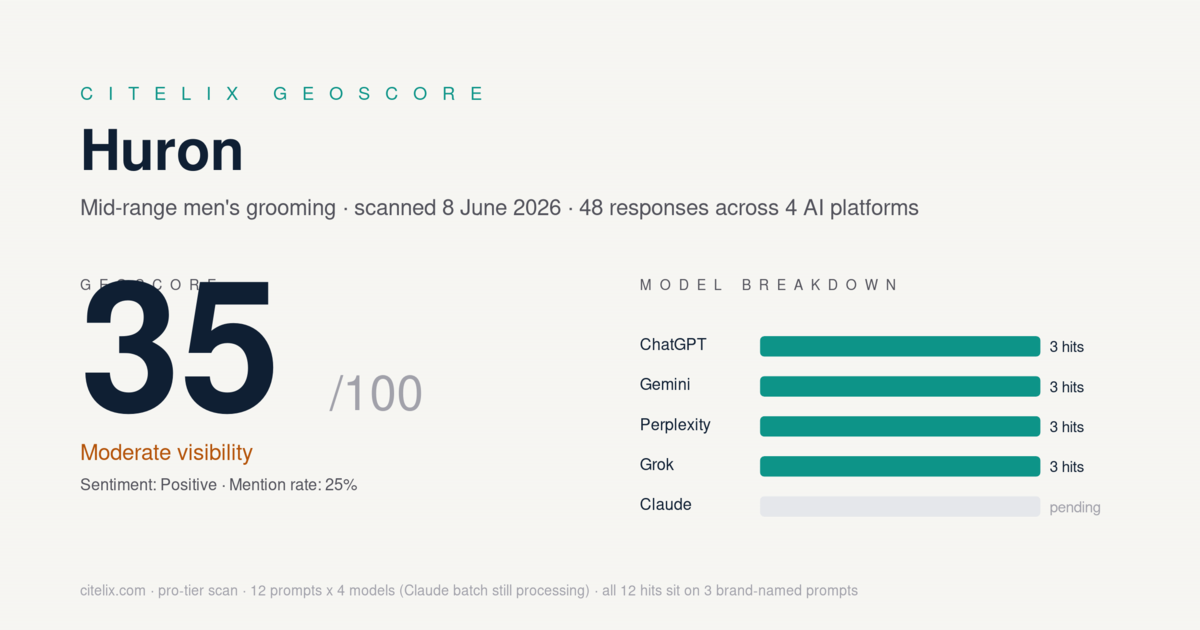
We scanned Huron across ChatGPT, Gemini, Perplexity, and Grok on 8 June 2026 (the Claude column was still processing at scan time, so the figures below cover 4 models and 48 responses). Huron landed a GeoScore of 35 out of 100, labelled Moderate Visibility, with a 25% mention rate and positive sentiment. That headline number looks healthy until you see where the mentions come from.
The prompt I tested
I asked ChatGPT: “Best deodorant for active men that is aluminum-free” on 2026-06-08.
Why this prompt: aluminum-free natural deodorant is Huron’s flagship category, and this is the exact phrase a buyer types when they are ready to switch deodorants but do not yet have a brand in mind. It is pure discovery intent. If Huron cannot surface here, it is invisible at the precise moment a new customer is deciding.
What ChatGPT said
ChatGPT returned a list of aluminum-free deodorants for active men. Huron was not in it. The brands the models surfaced on this prompt and its sibling discovery prompts (body odor without synthetic chemicals, body wash for sensitive skin and eczema) included Native, Dr. Squatch, and Harry’s. Native showed up across the unbranded deodorant and body care prompts repeatedly.
The models recommended fragrance-free, baking-soda-free, sensitive-skin formulas and named retail-available brands. Huron, a brand built for exactly this buyer, was absent.
Across the full 12-prompt scan, here is the pattern that matters: Huron was mentioned in 12 of 48 responses, and all 12 sit on the 3 prompts that put the word “Huron” in the query (a Dr. Squatch deodorant comparison, a Brickell bar soap comparison, and a Dapper Yankee deodorant comparison). On the 9 discovery prompts that did not name Huron, it scored zero.
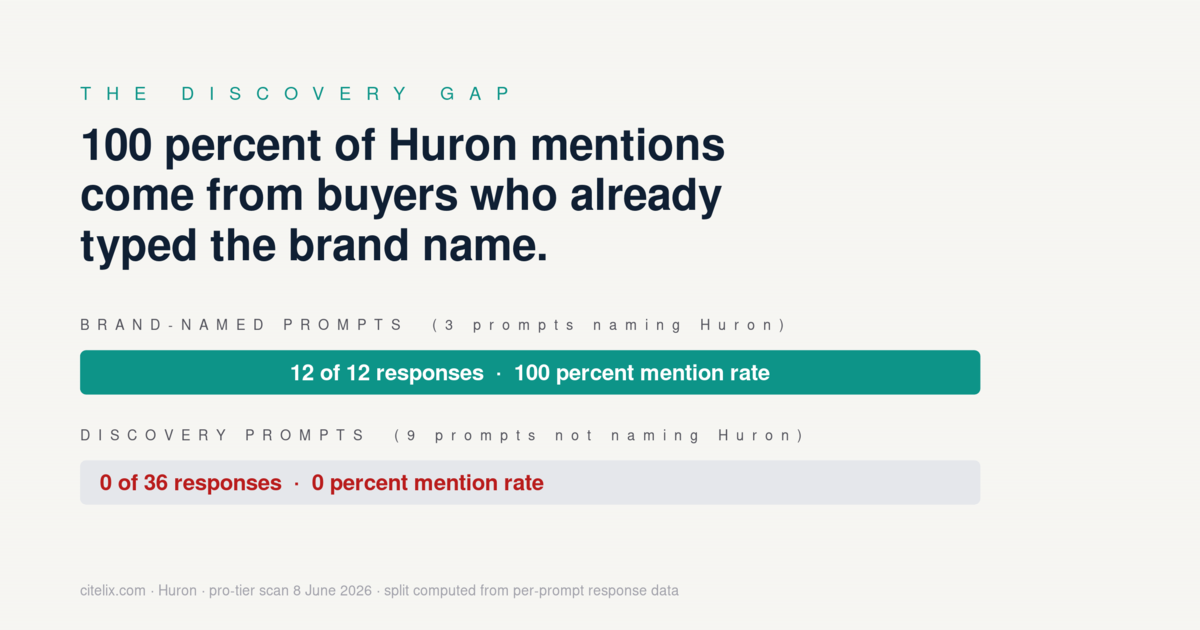
Note on the data: the scan dashboard headline shows “mentioned in 8 AI responses” in one card while the 25% mention rate and the per-prompt response data both point to 12 of 48. The per-prompt count is the one I trust here because you can verify it response by response. Either way, the split is the story: every mention is brand-aware, none are discovery.
Why Native won this citation
Native is not a better deodorant than Huron on the merits, and the models do not claim it is. Native wins the citation because its content is built the way AI models like to read. Five specific things:
1. Native publishes structured, problem-led content
Native has pages and articles organized around problems (sensitive skin, baking-soda-free, aluminum-free) rather than just product names. When a model answers “aluminum-free for active men,” it pulls from pages that already use those words as headings.
2. Native carries deep, visible review volume
Native’s product pages surface thousands of reviews with structured ratings. Review density is one of the strongest signals models use to decide which brand is “safe” to recommend to a stranger.
3. Native has broad third-party retail presence
Native is sold and reviewed across major retailers, so the models see it corroborated in many independent sources. Corroboration across domains is what turns a brand from “exists” into “recommended.”
4. Native’s category pages answer the question directly
Native’s collection and category pages carry real descriptive copy that maps to buyer language. Huron, by contrast, has 32 collection pages with no description at all (more on that below).
5. Native uses comparison and FAQ structure models can quote
Native’s content is chunked into headings, comparisons, and FAQ-style blocks that a model can lift a sentence from. Quotable structure beats beautiful prose in AI search.
What Huron is missing
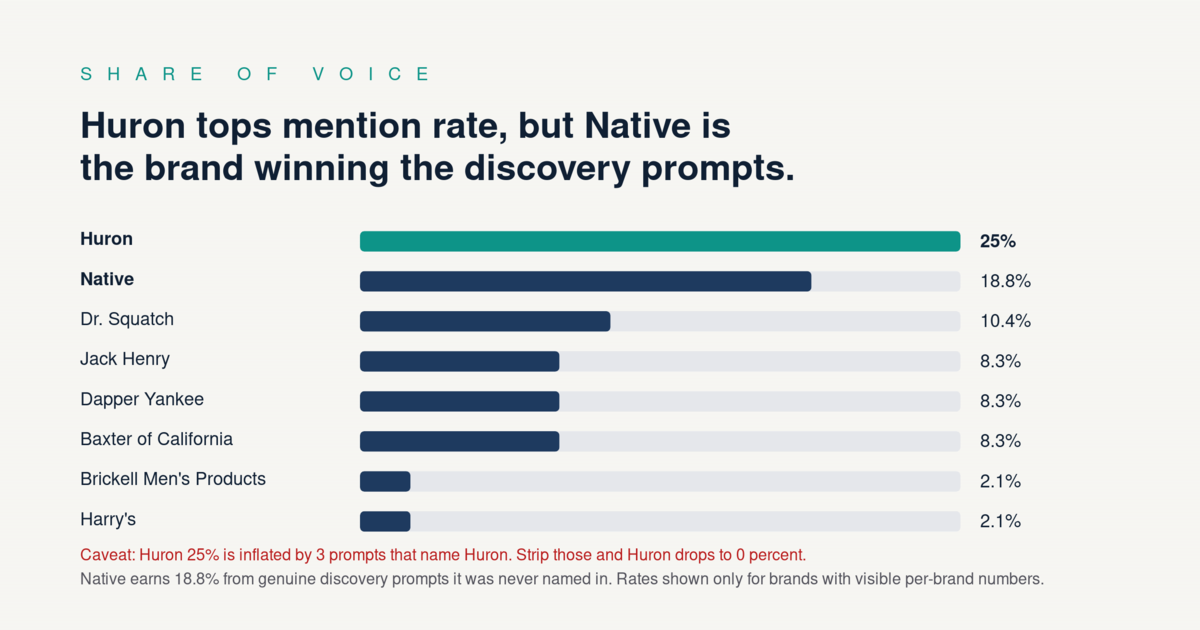
Huron’s share of voice looks like a win at first glance because its 25% rate tops the competitive set. Strip the 3 brand-named prompts and Huron drops to 0. Native, which earns 18.8% from prompts it was never named in, is the brand actually winning discovery.
Here is what I found on usehuron.com that is blocking the discovery citations:
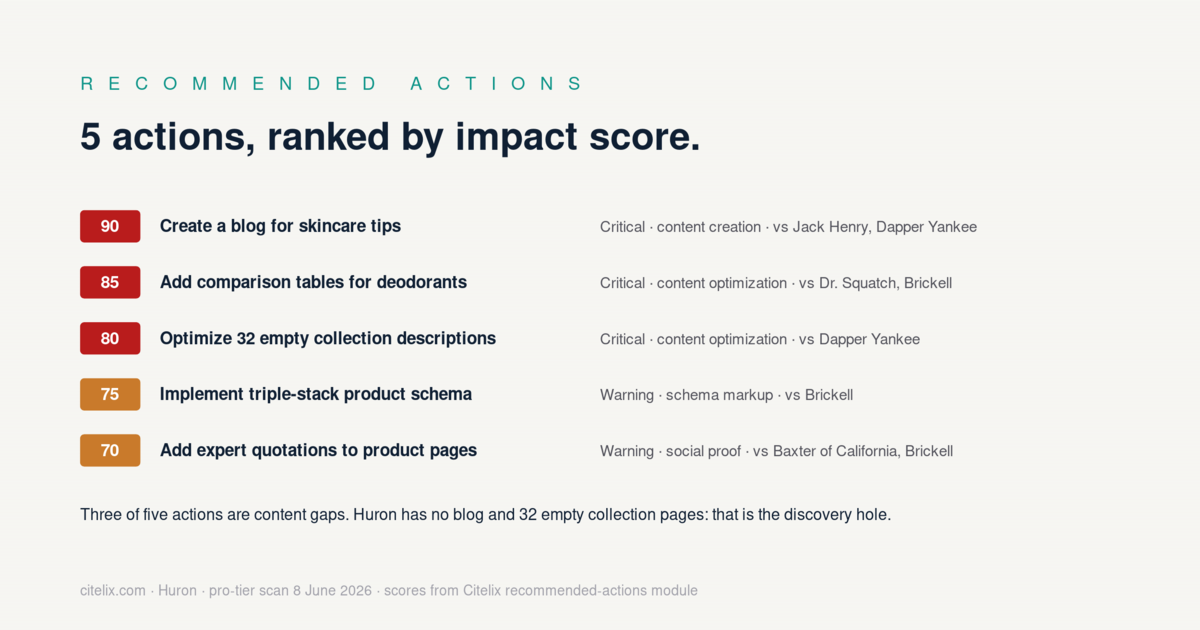
- No blog or editorial content, so there are no problem-led pages for models to cite on unbranded queries (usehuron.com has no /blogs path with active grooming content).
- 32 collection pages shipping with empty descriptions, so the category pages a model would read say nothing (Shopify admin: Products > Collections).
- No comparison tables on the deodorant product pages, so the models build the comparisons from competitors’ content instead of Huron’s.
3 fixes Huron could ship this week
These are the highest-leverage changes I would make if I ran Huron’s marketing. None require new product. None require ad spend. They map directly to the top three Critical actions Citelix flagged (scores 90, 85, 80).
Fix 1: Launch a problem-led grooming blog
Why this matters: discovery prompts are answered from content that uses the buyer’s words as headings. With no blog, Huron has nothing for a model to cite on “aluminum-free deodorant for active men” or “how to prevent body odor without synthetic chemicals.”
How to do it: In Shopify admin go to Online Store > Blog Posts. Publish 5 posts targeting the exact discovery prompts from this scan: aluminum-free deodorant for active men, natural body wash for sensitive skin and eczema, fixing dry flaky skin with natural products. Use the prompt phrasing as the H1. Answer the question in the first 100 words, then recommend the matching Huron product.
Estimated time: 1 day for the first 5 posts.
Fix 2: Write descriptions for all 32 empty collection pages
Why this matters: collection pages are prime real estate for category-level queries, and 32 of Huron’s are blank. A blank page gives a model nothing to read.
How to do it: In Shopify admin go to Products > Collections. For each empty collection, add 100 to 150 words that name the problem the collection solves, the ingredients, and who it is for. Lead with the category phrase a shopper would type.
Estimated time: 2 to 3 hours.
Fix 3: Add comparison tables to the deodorant product pages
Why this matters: the models already build Huron-versus-competitor comparisons on their own (that is the only place Huron wins). Give them a table to quote from and you control the framing.
How to do it: On each deodorant product page, add a simple table comparing Huron to the obvious alternatives on aluminum-free, baking-soda-free, scent, and price. Use real product attributes. Plain HTML table, not an image.
Estimated time: 1 to 2 hours.
The 30-second version
If you only do one thing: launch the blog and write your first post against “aluminum-free deodorant for active men.” It is your flagship category, you score zero on it today, and Native is winning it with content you can out-write in an afternoon.
Methodology
I ran this scan in Citelix on 2026-06-08 against usehuron.com, pro tier, 12 prompts across ChatGPT, Gemini, Perplexity, and Grok (Claude’s batch column was still processing at capture time, so totals reflect 48 responses across 4 models). Mention splits are computed from the per-prompt response data, response by response. This teardown is independent and not sponsored by either brand.
Want this teardown for your store? Install Citelix on Shopify. We scan your store across ChatGPT, Gemini, Perplexity, Claude, and Grok every day and tell you exactly which prompts your competitors win and what to change.